Last week the U.S. Department of Education issued a Dear Colleague Letter to states, school districts, schools, and education partners on how to maximize federal funds to support and enhance innovative science, technology, engineering, and math (STEM) education for all students. The letter serves as a resource for decreasing the equity and opportunity gaps for … Continue reading

Tagged with k-12 …
Partnering with Educators
For educators, there is so much more to a partnership than simply signing a contract. They seek resellers who are partners, not just during the sales pitch, but throughout implementation and the next budgeting cycle. Rachel McCoy with MDR Business Development for Marketing Solutions offered insight at EdNET 2015 about how companies can meet those … Continue reading
Google Accused of Tracking Student Data
Last week the Electronic Frontier Foundation filed a complaint with the FTC accusing Google of monitoring the online activity of students who use its Chrome browser. According to the EFF, Chromebooks sold to schools through Google’s education program have had their “Sync” feature enabled, which has allowed Google to track, store, and data mine records … Continue reading
Powering the 21st Century Classroom
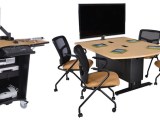
With mobile devices so prevalent and essential in today’s classrooms, schools must ensure that accessible power is available to students at all times. To address this challenge schools are beginning to turn to the next generation of school furniture and equipment – technologically-enabled tables, chairs, podiums, shelving, and other furniture. Power-enabled furniture and equipment have … Continue reading
School Connectivity in 2015
In early November of 2015, CoSN (in partnership with AASA and MDR) released the results of their 3rd Annual E-Rate and Infrastructure Survey regarding wireless connectively in schools throughout the United States. The survey’s respondents hailed from a diverse mix of school sizes and locations, but common themes and challenges were identified for all ed-tech … Continue reading
The Growth of Flipped Learning (Infographic)
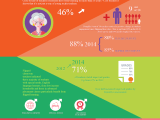
With the rise of mobile learning in the classroom educators are increasingly shifting away from “traditional” teaching models towards a more flexible approach. One approach that has gained widespread popularity is the flipped classroom. In a flipped classroom strategy the traditional instructional content is delivered outside of the classroom, and “homework” activities take place in … Continue reading
Questions to Ask Before Going 1:1
1:1 learning in education refers to a model in which each student has access to a portable, networked digital device such as a notebook or tablet that connects students with their teacher, other students, and/or experts. Implementing a 1:1 initiative with any device is a great way to provide students with access to technology in … Continue reading
Tips for BYOD Implementation in Education
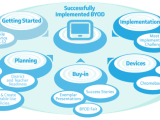
BYOD (Bring Your Own Device) is a trend that has been becoming increasingly more popular in education – almost 50% of districts allowed, or were developing a BYOD policy in 2014. After weighing the pros and cons and deciding to roll out a district-wide BYOD program, here are some of the top tips for implementation: … Continue reading
Pros and Cons of BYOD
While the rise of BYOD (Bring Your Own Device) in education has largely been fueled by the cost savings it provides schools, there are many pros and cons schools must weigh when contemplating a BYOD program: Pros Technology. First and foremost, BYOD allows schools to provide their students the technology necessary in today’s classroom. Additionally, … Continue reading
The Rise of BYOD
As the 2014-2015 school year draws to close there’s no better time to examine one of this year’s fastest growing trends in the U.S. K-12 Market: BYOD. BYOD, or “Bring Your Own Device,” refers to the mobile learning initiative in which students and staff are permitted to use their personal mobile devices in the classroom. … Continue reading