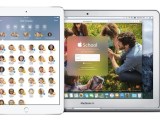
On Monday (3/21/2016) Apple released the latest version of its mobile operating system, iOS 9.3, and with it comes new features for iPad® devices in education. The release aims to open up new and engaging ways of teaching and learning on the iPad. New features include allowing teachers to manage student devices, share work and … Continue reading
Filed under Mobile Learning …
Investments in Career and Tech Education Announced
Last week (3/9/2016) The US Department of Education announced their plan to increase support for career and technical education (CTE) courses for students. Education Secretary John B. King Jr., has emphasized the importance for an increase in student access to CTE classes, especially for those who come from more diverse backgrounds. Additionally, he has called … Continue reading
The Benefits of Adding Video to Teacher Evaluations
A big challenge facing K-12 education today is ensuring that teacher evaluations evolve with available technology in an effective and productive way. In 2012, Miriam Greenberg and the Center for Education Policy Research at Harvard piloted the Best Foot Forward Project to study the impact video could have on teacher evaluation. The project included evaluating … Continue reading
A District’s Critical Infrastructure Needs
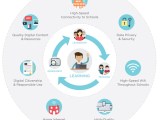
Preparing students to be successful for the future requires a robust and flexible learning infrastructure capable of supporting new types of engagement and providing access to the technology tools that allow students to create, design, and explore. There are many essential components of a district infrastructure, representing key cross-selling opportunities for resellers. The 2016 National … Continue reading
Partnering with Educators
For educators, there is so much more to a partnership than simply signing a contract. They seek resellers who are partners, not just during the sales pitch, but throughout implementation and the next budgeting cycle. Rachel McCoy with MDR Business Development for Marketing Solutions offered insight at EdNET 2015 about how companies can meet those … Continue reading
Google Accused of Tracking Student Data
Last week the Electronic Frontier Foundation filed a complaint with the FTC accusing Google of monitoring the online activity of students who use its Chrome browser. According to the EFF, Chromebooks sold to schools through Google’s education program have had their “Sync” feature enabled, which has allowed Google to track, store, and data mine records … Continue reading
Powering the 21st Century Classroom
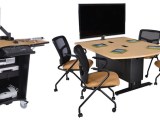
With mobile devices so prevalent and essential in today’s classrooms, schools must ensure that accessible power is available to students at all times. To address this challenge schools are beginning to turn to the next generation of school furniture and equipment – technologically-enabled tables, chairs, podiums, shelving, and other furniture. Power-enabled furniture and equipment have … Continue reading
School Connectivity in 2015
In early November of 2015, CoSN (in partnership with AASA and MDR) released the results of their 3rd Annual E-Rate and Infrastructure Survey regarding wireless connectively in schools throughout the United States. The survey’s respondents hailed from a diverse mix of school sizes and locations, but common themes and challenges were identified for all ed-tech … Continue reading
Google Chromebit Adds Portability to Education
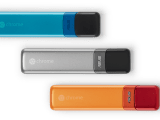
In March of this year, Google and ASUS announced their plans for the Chromebit – a full Chrome-OS based computer on an HDMI stick – and this week marked it’s official launch. The Chromebit enables users to run Chrome OS on any screen with an HDMI port, whether it’s a regular computer screen, TV, etc. … Continue reading
Chromebooks Gaining on Tablets in Education
As schools continue to invest in technology, the amount of devices found in the classroom is surging. Last year, the revenue for desktops, laptops, tablets, and two-in-one computers shipped to K-12 schools and higher education institutions in the United States amounted to $7 billion, according to estimates for IDC. In total, about 13.2 million systems … Continue reading