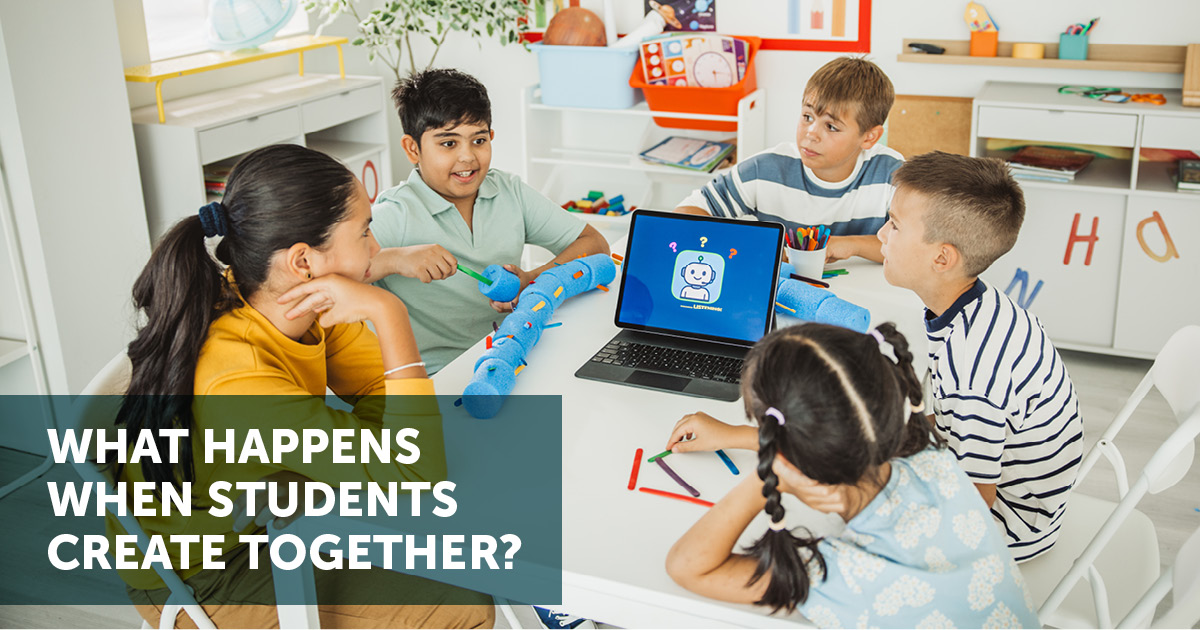
Generally, individual achievements often take precedence over a collective group, fostering a competitive rather than a cooperative environment. Collaboration is more than a classroom strategy or a way to pass students time—it’s a powerful skill that sets students up for success in school, relationships, and life. Creative collaboration lets students engage with the material in unique ways, transforming traditional lessons into dynamic experiences.
Check out some ways creative student collaboration drives learning success.
Preparing Students for the Work Force
While working in groups, students learn to manage deadlines, contribute consistently, work on shared goals and complete deliverables together. With groups, students also will have to take on leadership roles and learn how to adapt and adjust their roles as the project progresses, enhancing self-management.
Employers often seek people who have collaborative abilities, and skills in active listening, empathy, and self-awareness. Practicing collaboration in the classroom is vital to ensuring that young people can work well with others when they enter the professional world.
Supports Peer Relationships
Creative collaboration grows students’ ability to build relationships with regular opportunities to speak clearly, listen carefully, and revise ideas together. Students also gain exposure to diverse perspectives, helping them develop flexibility, interpersonal skills, and empathy.
Since each member of the group is essential to the outcome, students will learn to embrace each other’s strengths and learn how to work effectively together while learning about each other, forming meaningful relationships.
Builds Up Confidence
Group projects build confidence by allowing students to witness how their own efforts support the success of themselves and others. Many students become more invested in class when they know their ideas matter.
Working together, students feel responsible not only for their own progress but also for the success of their team. Smaller groups also help students adjust more easily to active participation as they work out problems together, slowly building their interpersonal skills and confidence.
Deepens Understanding & Critical Thinking
When students engage in collaborative problem-solving, they learn to value different viewpoints, negotiate solutions, and persevere through setbacks as a team. These experiences not only enhance academic outcomes but also help students build resilience and creative thinking skills.
A student may also think they understand a concept until they try teaching it to someone else. That moment of explanation becomes a powerful learning experience. This can be very useful for more complicated lessons in STEM and STEAM.
Supports Different Learning Styles
For neurodivergent students, structured collaboration can reduce the pressure of fully independent assignments. Students with ADHD, dyslexia, autism, or executive functioning challenges often benefit from shared accountability and clearly defined roles.
Language immersion can also come into play for non-native speakers. Students hear classmates explain concepts in multiple ways, then practice responding themselves. That repeated peer interaction builds confidence and language fluency.
What kind of collaborative lessons have helped out the most in your classroom? Let us know in the comments!
Resources:
https://www.secondstep.org/resources/blog/how-collaboration-helps-kids-succeed
https://paedu.org/blog/the-role-of-creativity-in-education-why-it-s-a-must-for-every-student

