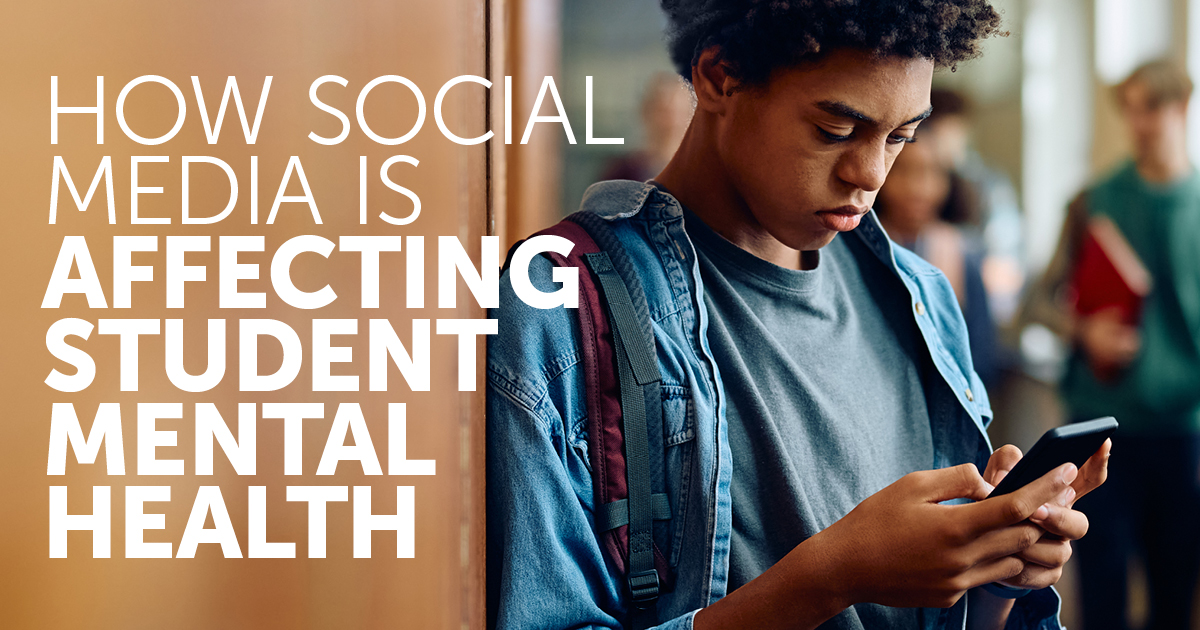
Most teens are on some type of social media platform daily – if not consistently – with TikTok alone having 57% of teens in the U.S. visit every day. As digital media – apps like Instagram, TikTok, and other popular smartphone platforms – become increasingly embedded in daily lives, it causes experts to question how social media is affecting kids’ minds.
Interestingly, studies have generally failed to find support that the longer someone is on social media the grater affect it has on their mental health. That don’t mean it doesn’t cause harm at all, but the length of social media exposure doesn’t cause additional harm, just that exposure at all can. Social media has caused reports of elevated depression, anxiety, suicide risks, and eating disorders, especially in younger audiences.
Findings also show that teens who use social media display different patterns in executive functioning—skills like paying attention, controlling impulses, and staying organized. These differences were stronger in young people with more behavior problems that are shown outwardly, such as aggression, frequent anger, irritability, and refusing to follow rules. Other specialists are also looking into whether fast-paced digital media (like TikTok and YouTube Shorts) affects brain function and connections differently in youth with and without ADHD. Social media apps such as Instagram and TikTok, which encourage algorithm-driven scrolling, are worse for mental health than platforms such as Facebook and WhatsApp, which priorities social connection.
To use social media responsibly, kids and teens need to create boundaries to help balance online and offline activities. Limiting social media to an hour or less has been found to lead to higher life satisfaction, but that also includes being particular about what they expose themselves to.
Have you seen a change in students in the classroom based on media exposure? Let us know in the comments!
Resources:
https://medicine.yale.edu/news-article/social-media-and-youth-mental-health/

