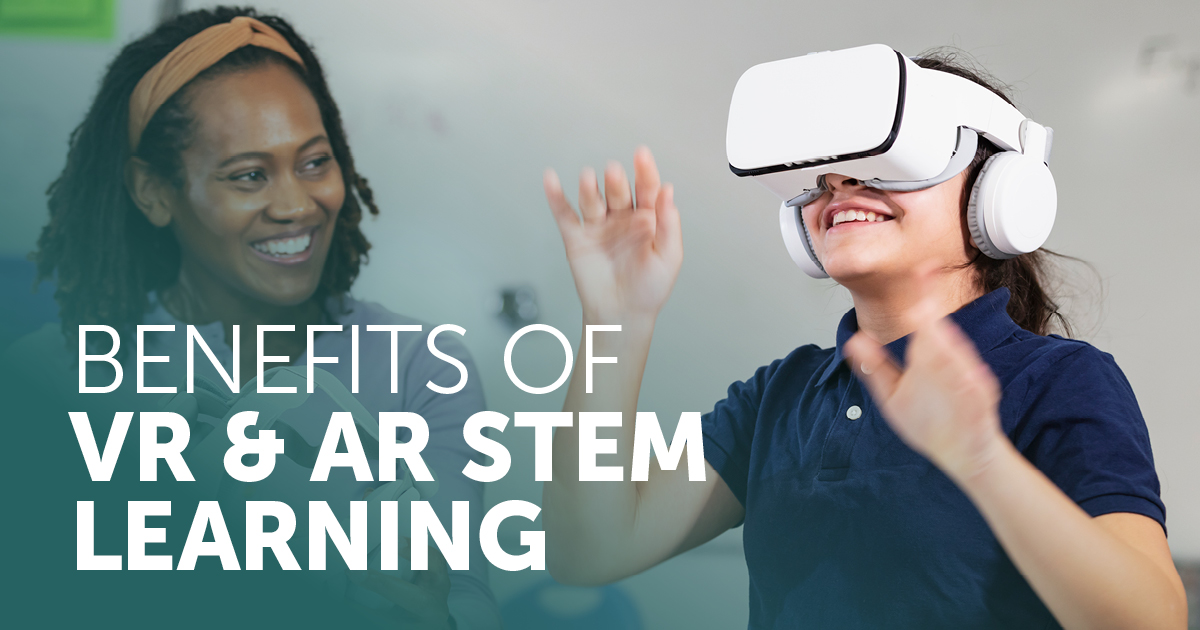
Augmented reality and virtual reality are visualization tools to help students grasp difficult ideas more easily. While AR is great for visualizing things, VR is better for full-on immersion, both offering experiential learning that leads to better test scores and improved memory recall.
Here are some benefits of implementing AR and VR in education.
Differences between AR and VR:
Augmented reality and virtual reality are fundamentally different in the way they interact with the environment. While augmented reality enhances the real world by overlaying virtual elements, virtual reality creates a completely new environment , immersing the user in a fully digital experience.
Benefits of AR and VR in the classroom:
These technologies not only have a positive impact on academic performance, but also transform the educational experience, making learning more accessible, engaging, and tailored to the individual needs of students.
- More Autonomous Learning
- Improved Preformance and Focus
- Personalization of Learning
- Increased Participation, Collaboration, and Motivation
- Facilitate Enhanced Learning Experiences
- Realtime Feedback
Benefits of students with disabilities using VR and AR during learning:
VR and AR can adapt to each student’s needs and learning style, supporting students with different abilities and challenges, enhancing how they engage with educational content.
- Control stressful situations in a safe learning environment
- Practice social situation challenges at own pace
- Supports different specific types of sensory input
- Offers adjustable visual and audio options
- Removed physical obstacles for students with movement limitations
Real-World Applications of AR and VR in Education
- Virtual Field Trips
- Career Readiness
- STEM Education
- Medical Training
- Digital Art
How does your school implement VR and AR in the classroom? Let us know in the comments!
Resources:
 VARconnection