According to a 2021 NSF Diversity and STEM research, even though there has been an increase in a representation of women (34%) and minorities within STEM over the last ten years, there still exists a large gap needing to be filled.
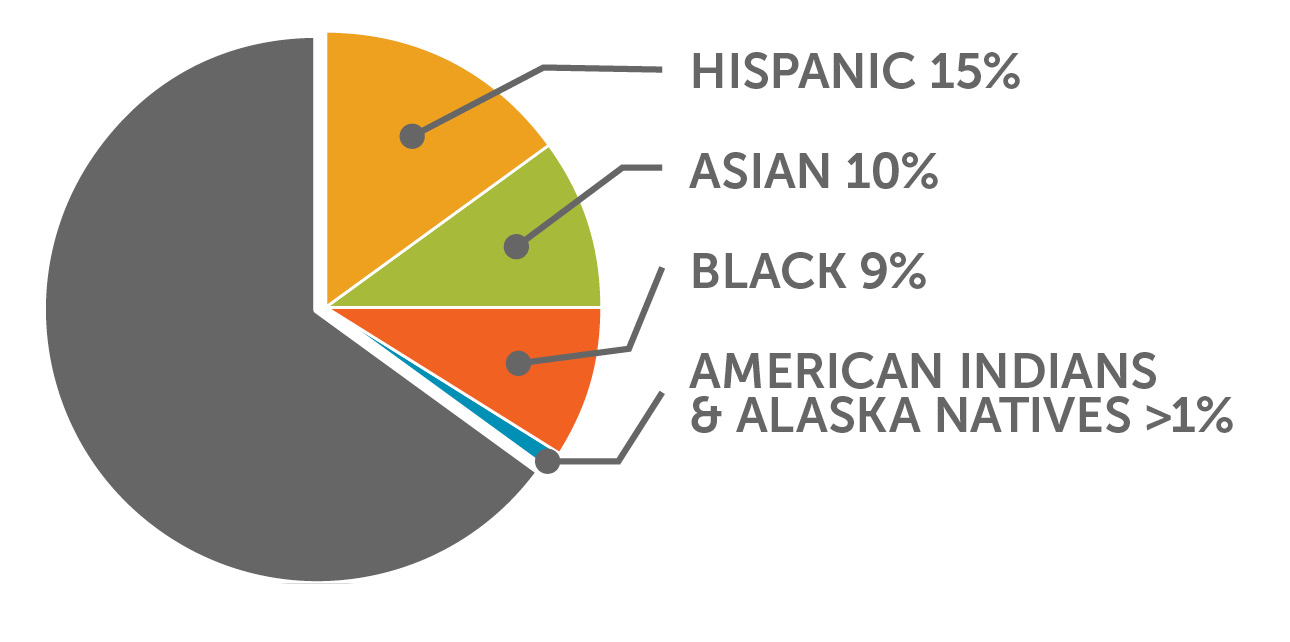
In 2021, women represented nearly two-thirds (65%) of workers in S&E-related occupations, though had lower median earnings then men in the same field. Nearly two-thirds (65%) of women working in STEM jobs in 2021 had at least a bachelor’s degree education, compared with less than half (43%) of men in STEM jobs.
In 2020, Hispanic, Black, and American Indian or Alaska Native STEM workers had lower median earnings than White or Asian STEM workers. Minorities continue to face challenges in pursuing STEM careers due to a lack of access to resources and institutional biases. Early education programs often fail to expose them to technology career paths or inspire a love for technology.
Another major obstacle is for teachers of STEM is the need for resources. First and foremost is the need to find curricular resources that include not only all four STEM disciplines but are also designed in such a way to make integration simple and seamless. In addition to curriculum resources, a STEM classroom relies heavily on physical materials. Many teachers already spend a lot of their own money on classroom materials, and a STEM classroom can be an even greater burden.
What are some other inequities you have faced within STEM?
Resources
 VARconnection